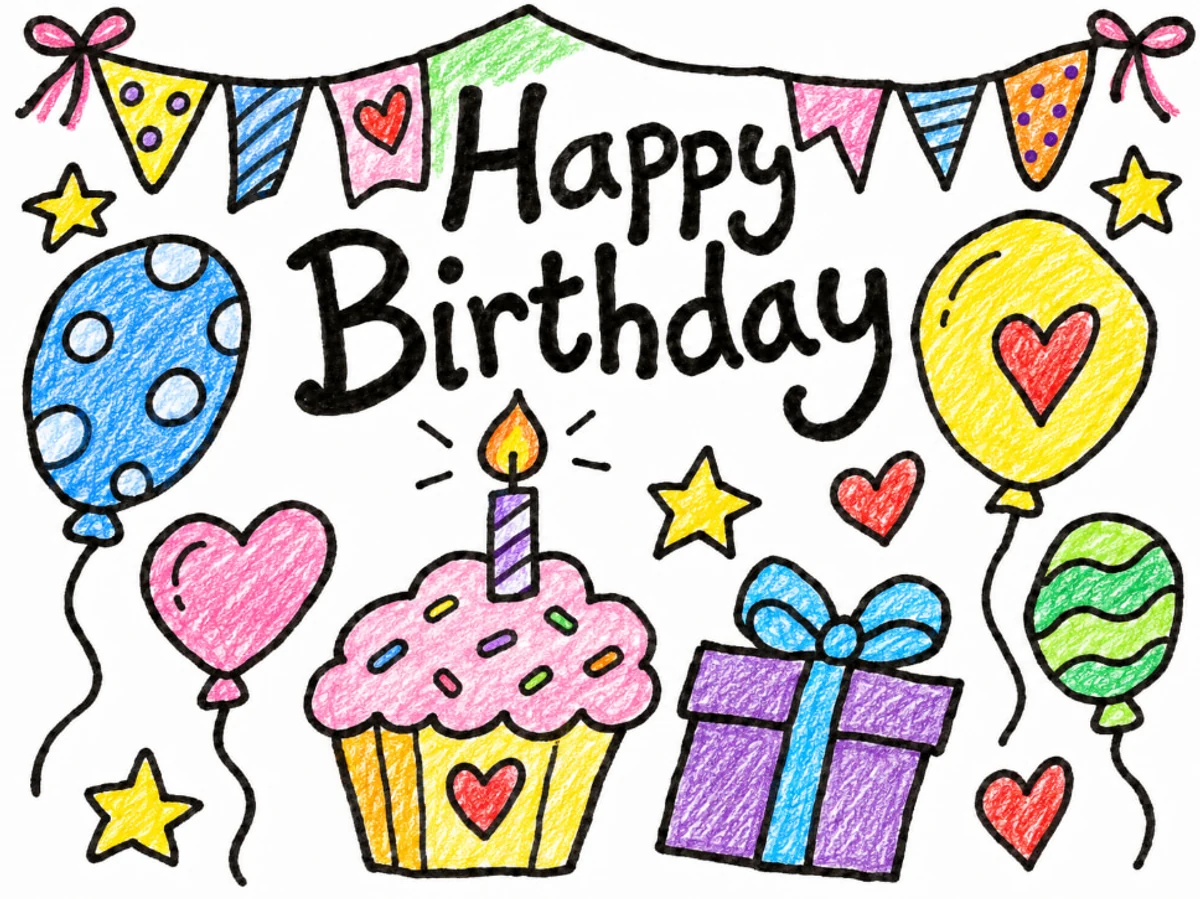
Birthday card covers I drew for making your own card. Print one small, color it, and glue it onto folded cardstock. There are three covers, one of them with a banner for a name, plus a step-by-step sheet for drawing a card from scratch. Tap any page to see it full size and grab it as a PDF, a transparent PNG or an SVG.
4 printables Free · No sign-up · A4 & US Letter · Updated 2026-11-04
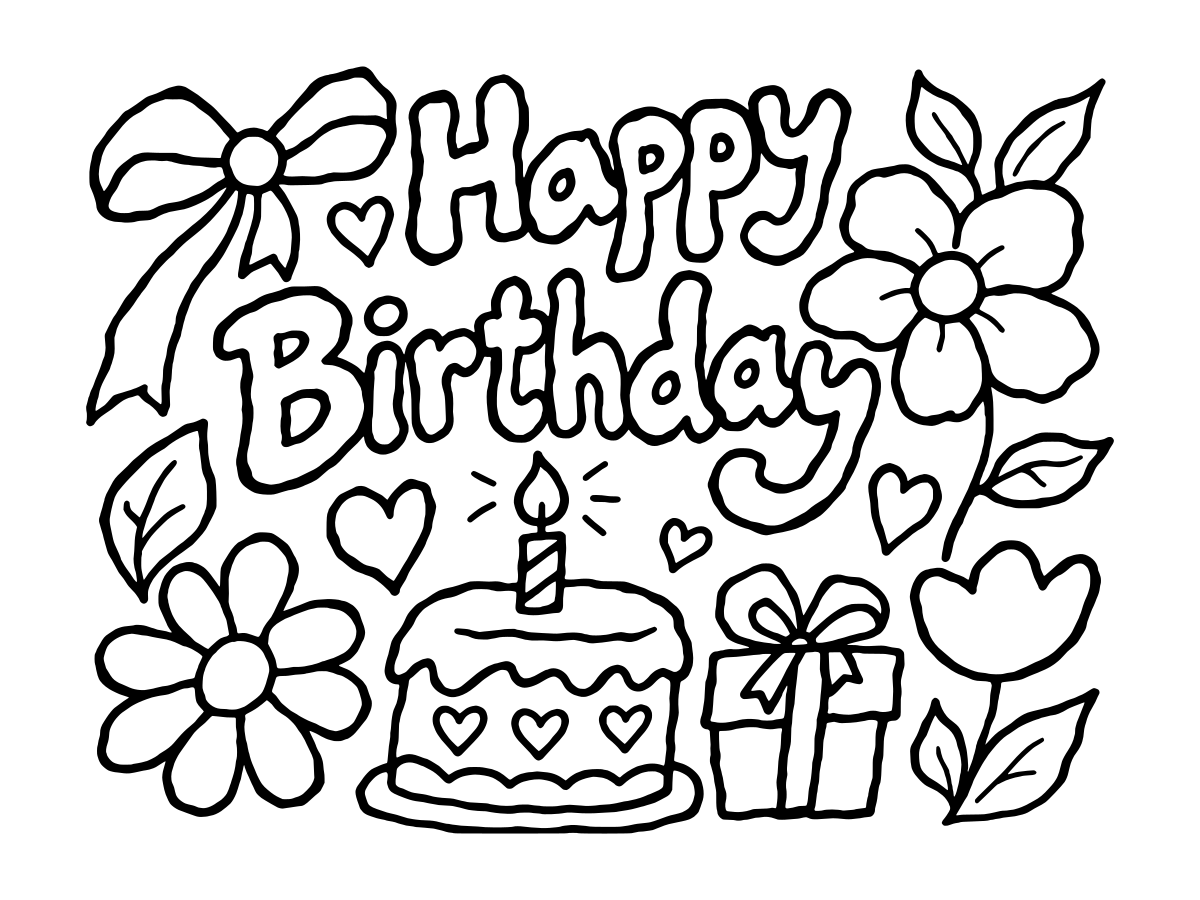
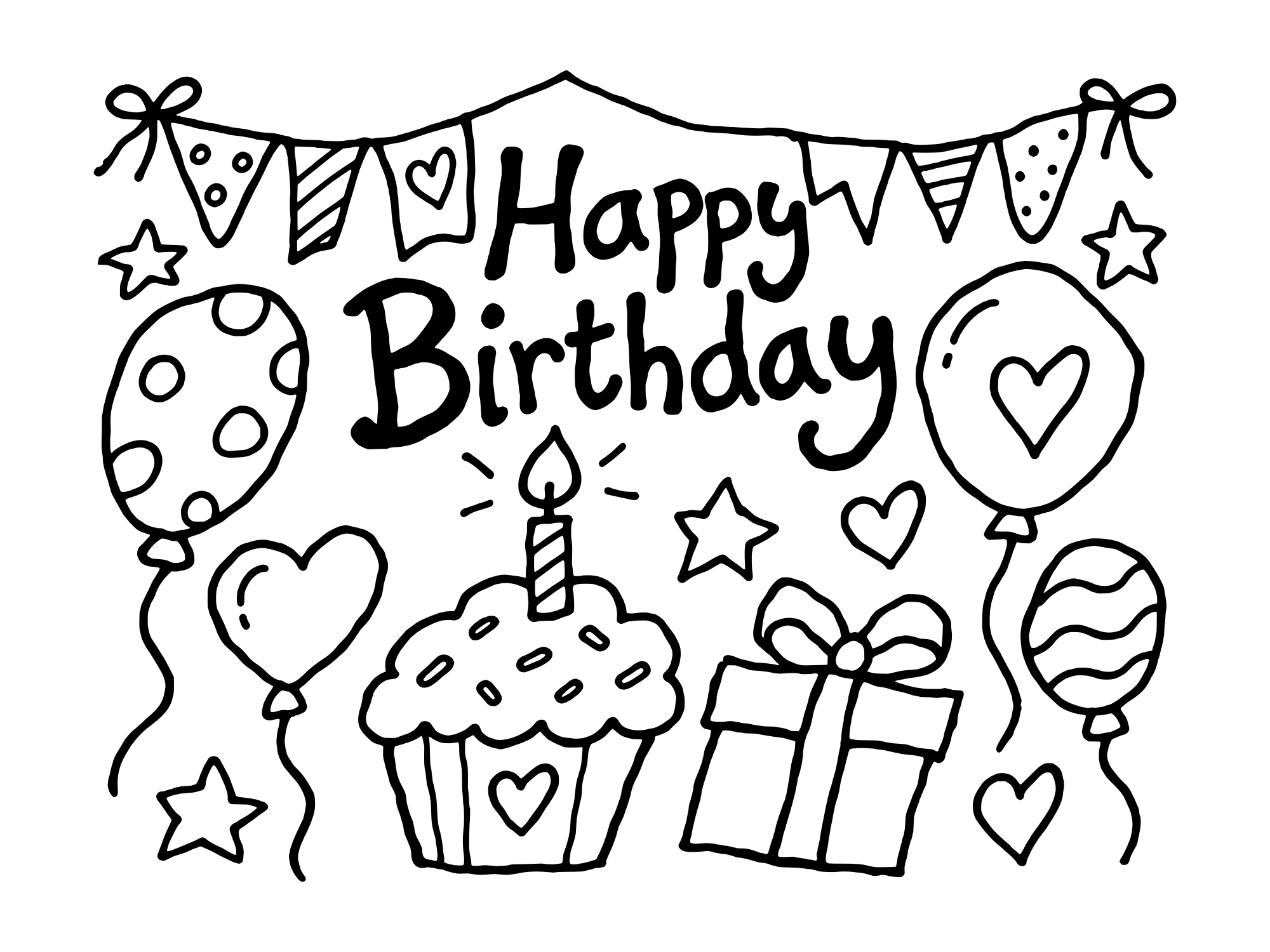
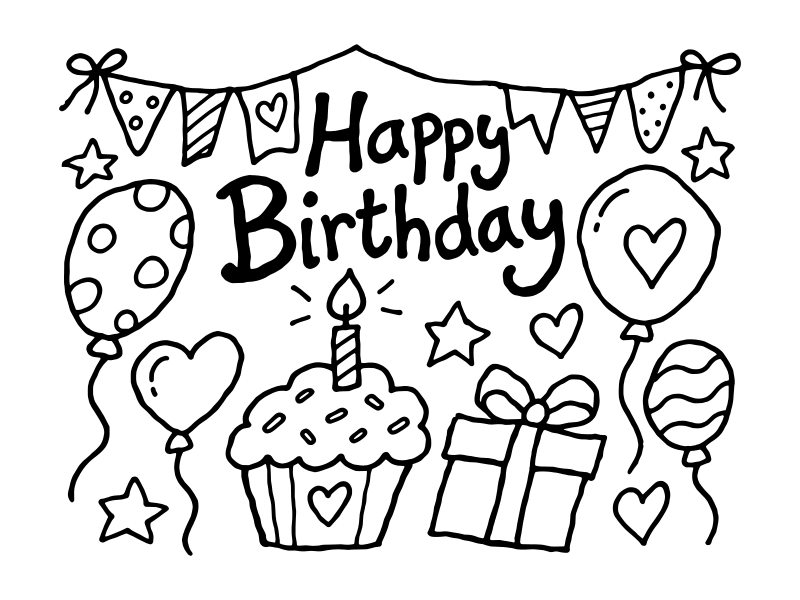
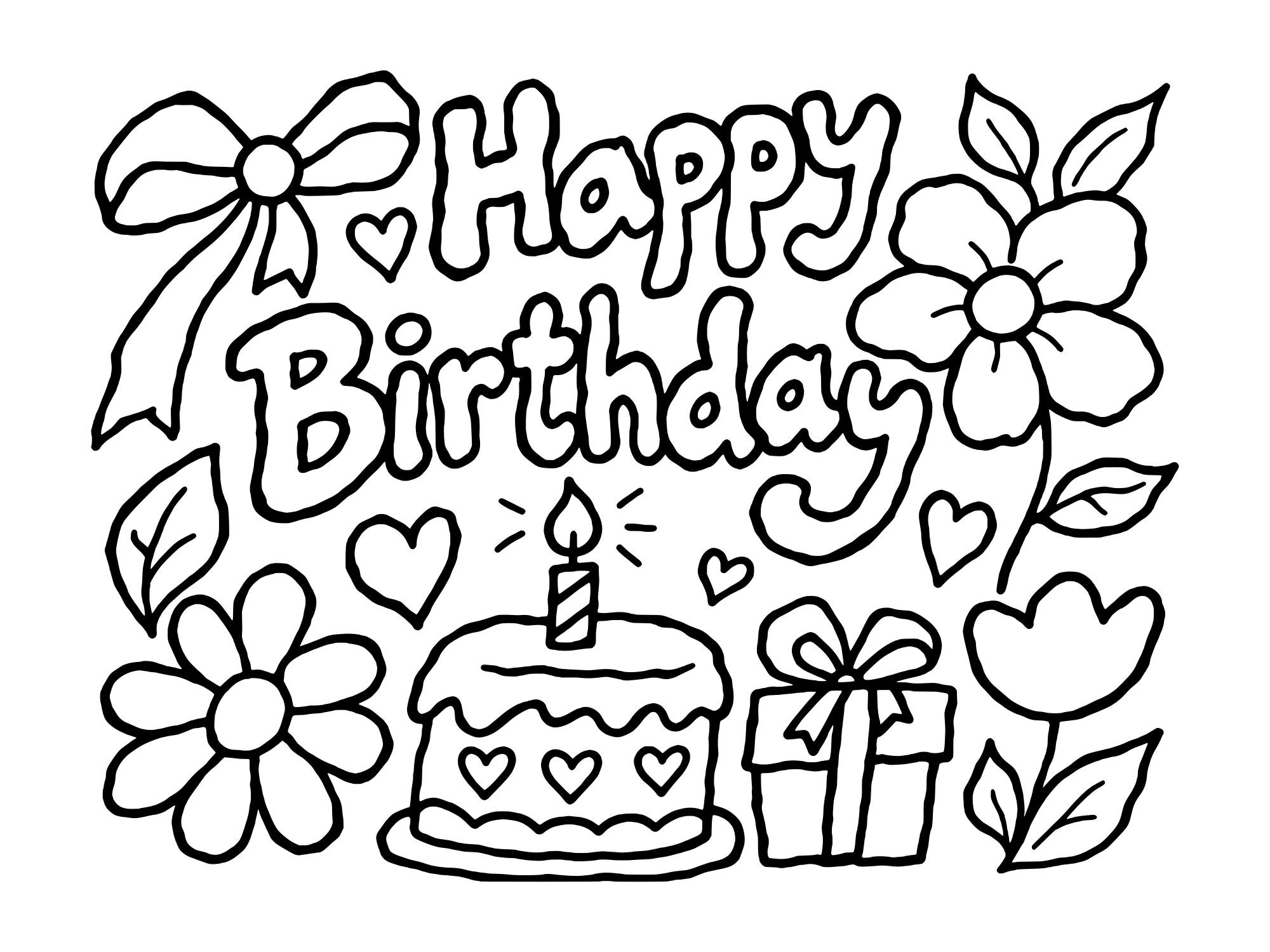
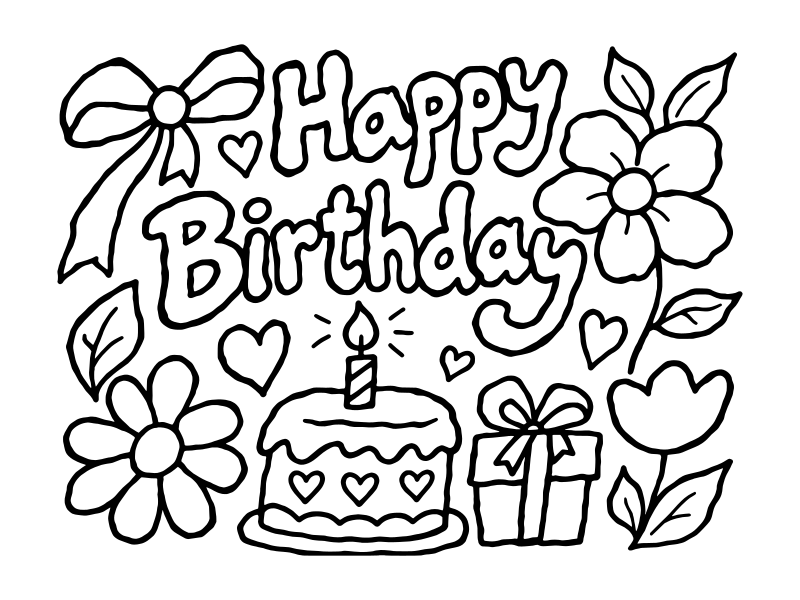
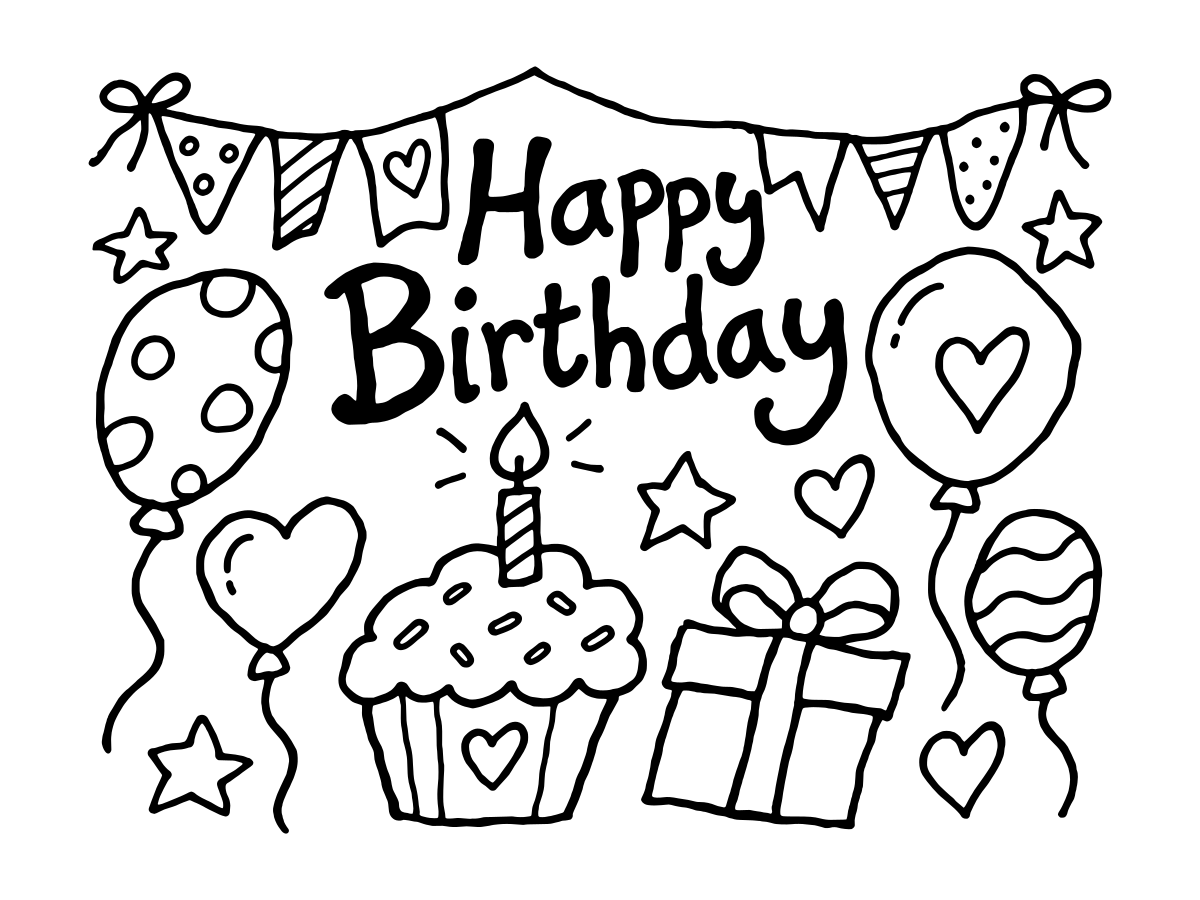
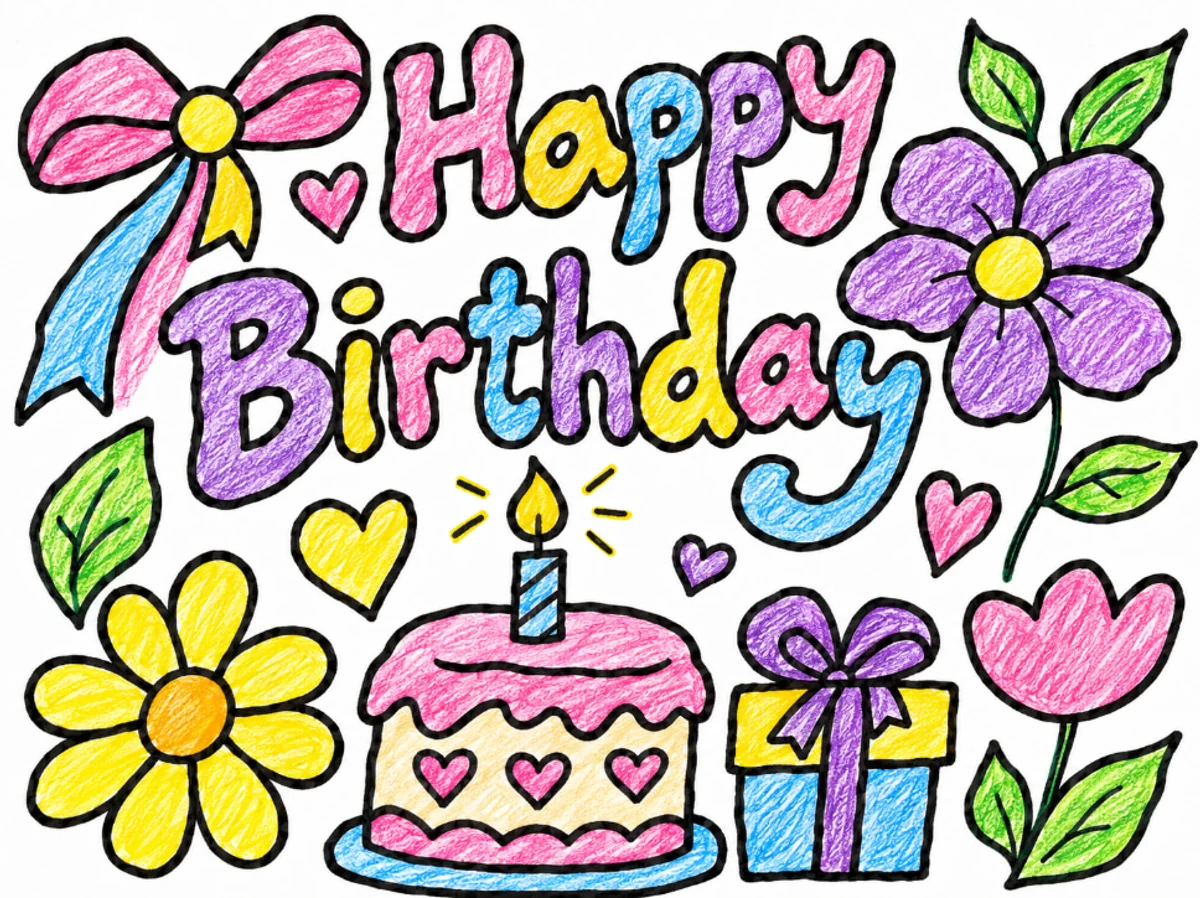
Two birthday card covers to color, cut out and glue onto folded cardstock. One has bunting, balloons and a cupcake. The other has a big bow, daisies and a tulip. Colored in, either one turns into a handmade happy birthday greeting card in about twenty minutes.
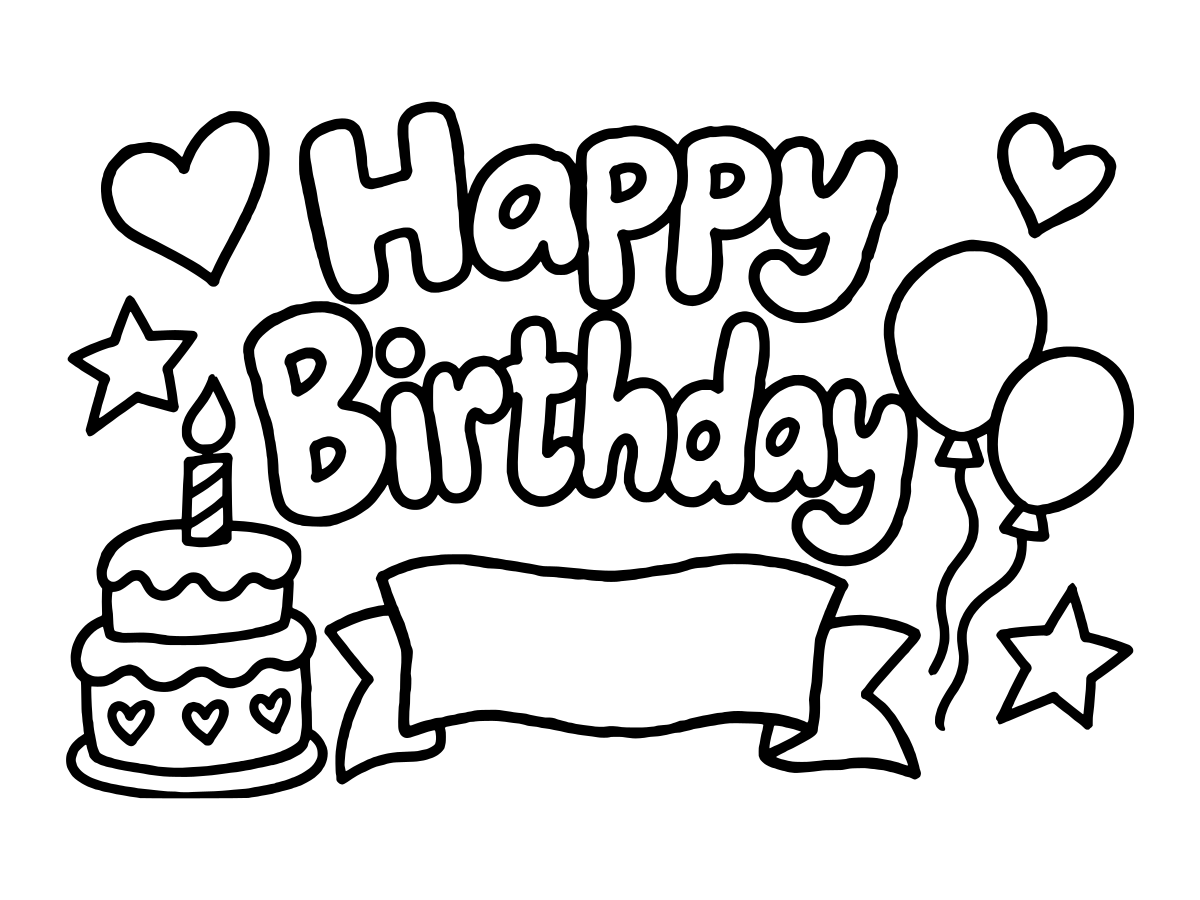
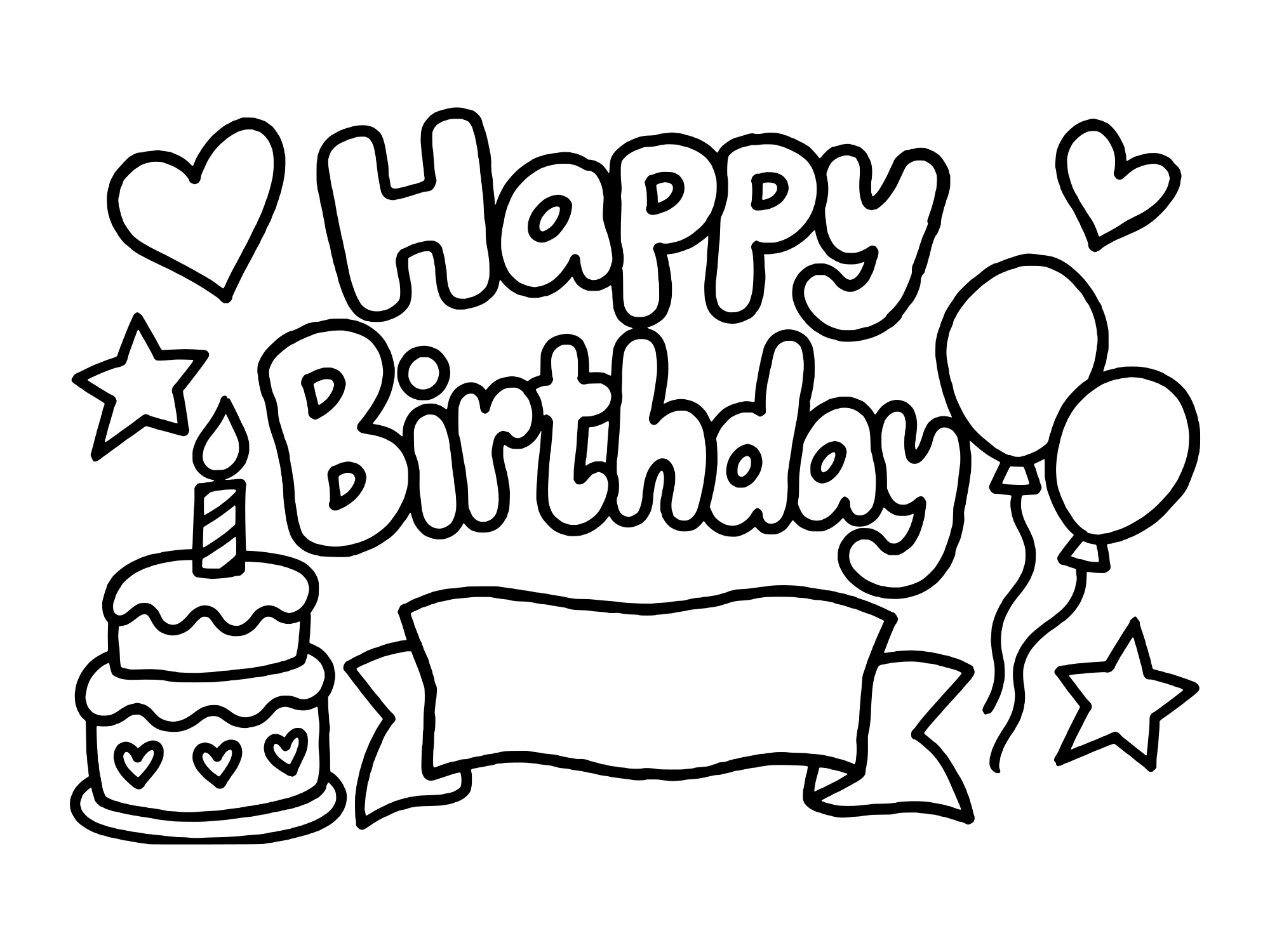
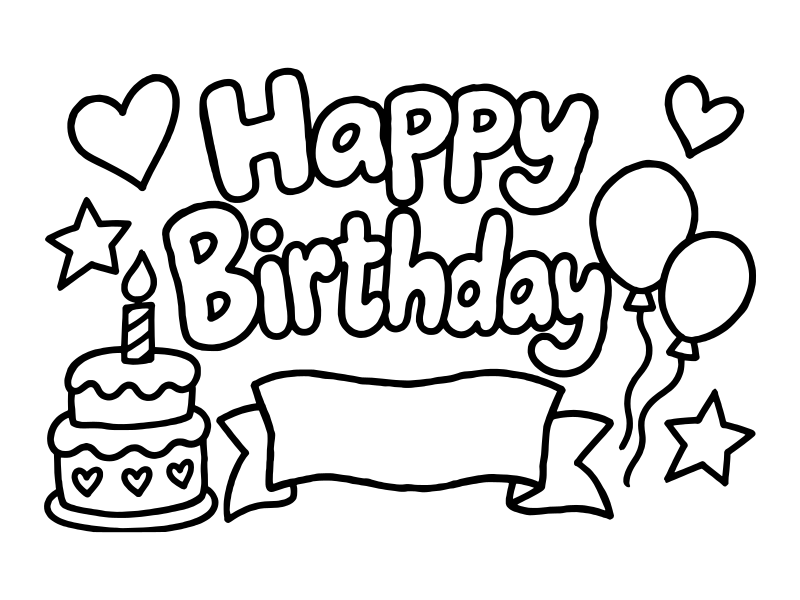
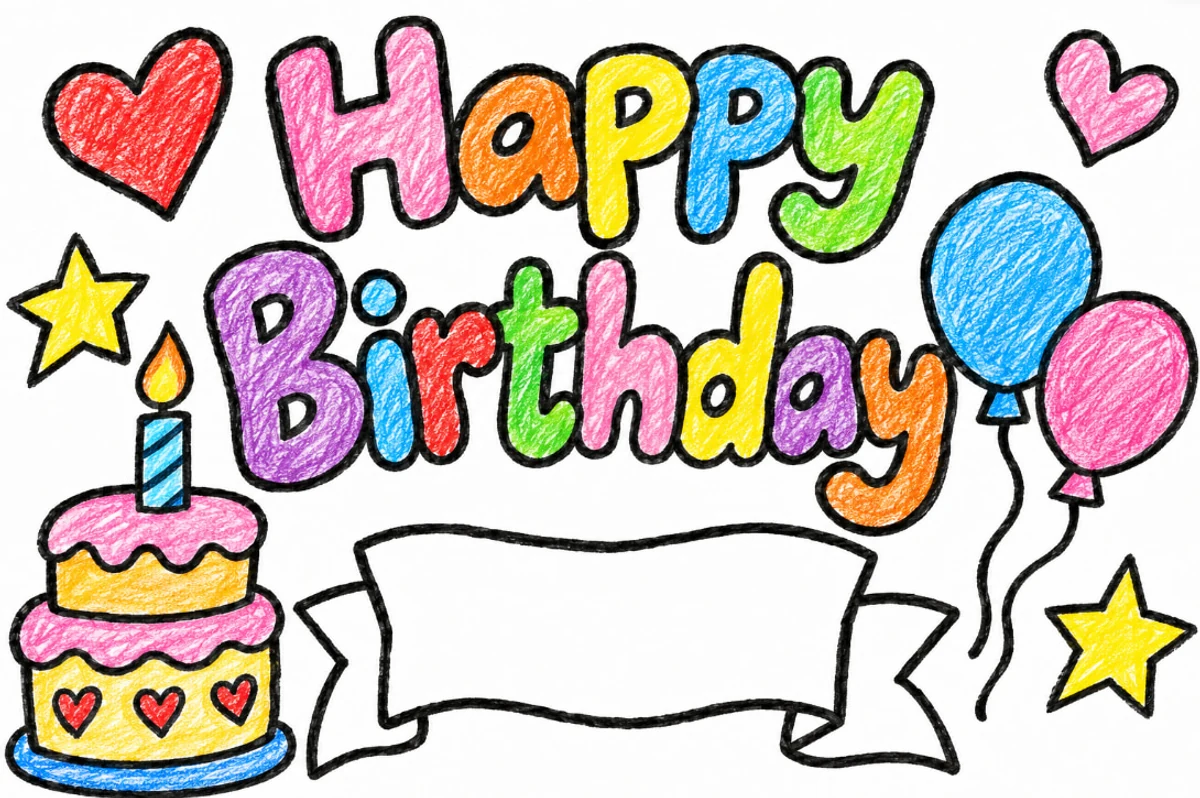
This cover has an empty banner under the lettering for the birthday person's name. Write it in and the cover's theirs alone, which is about as customizable as a birthday card gets.
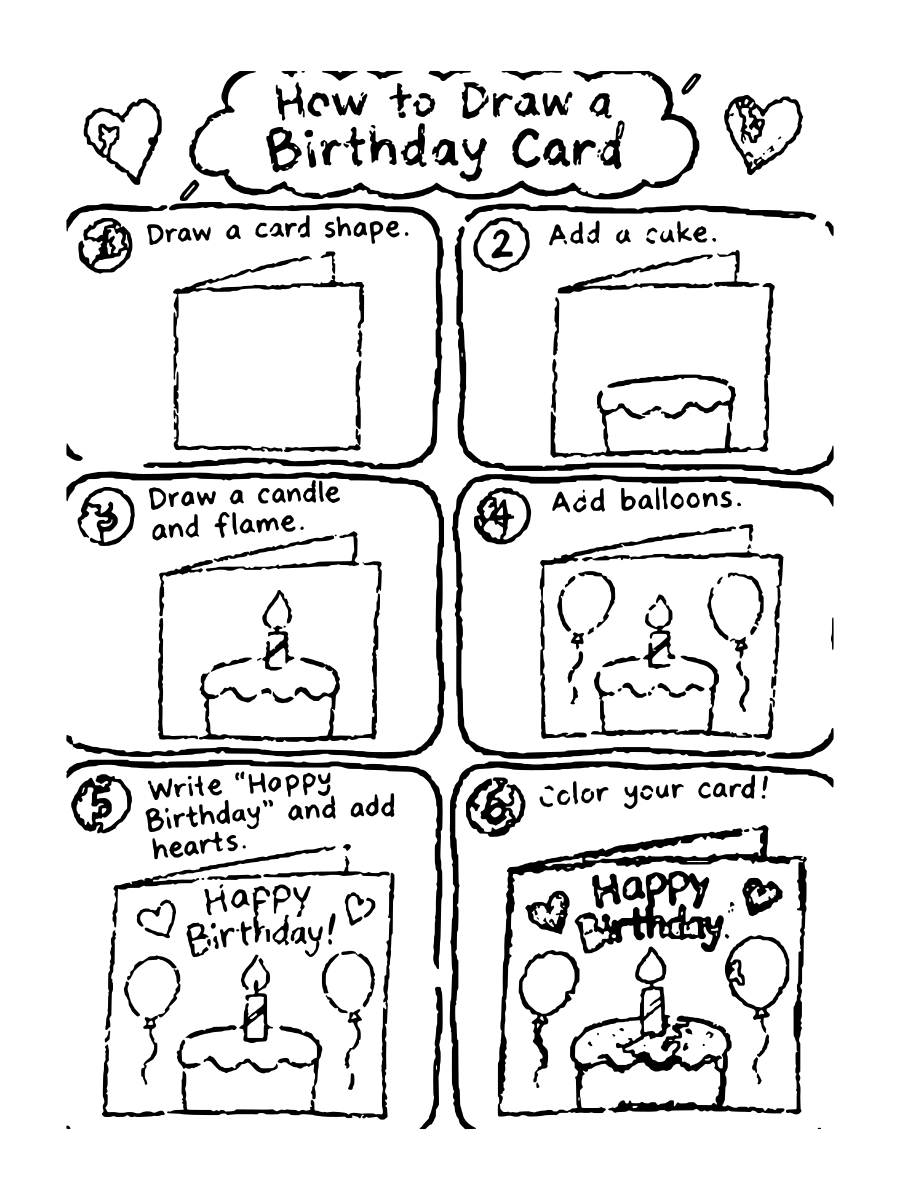
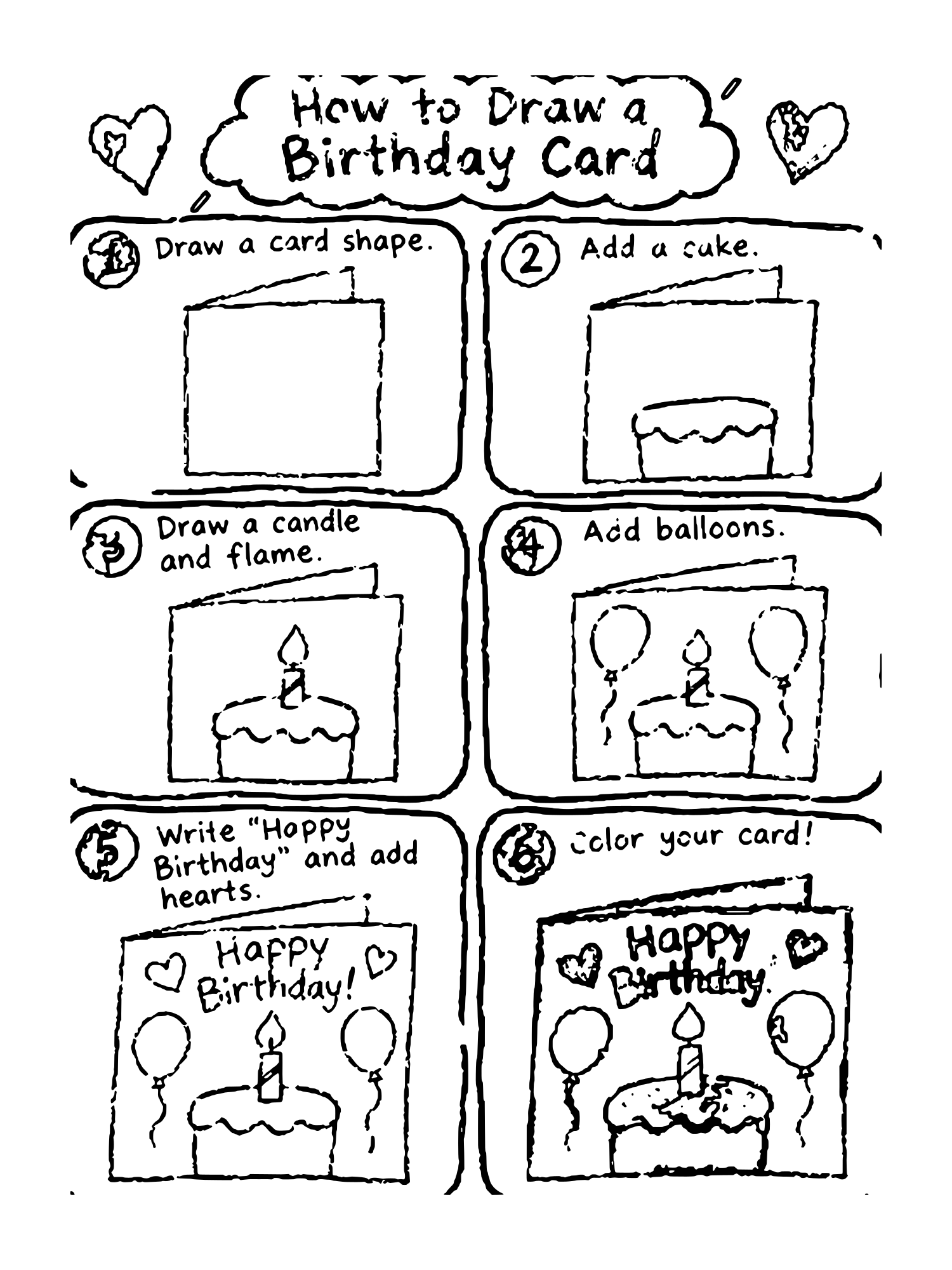
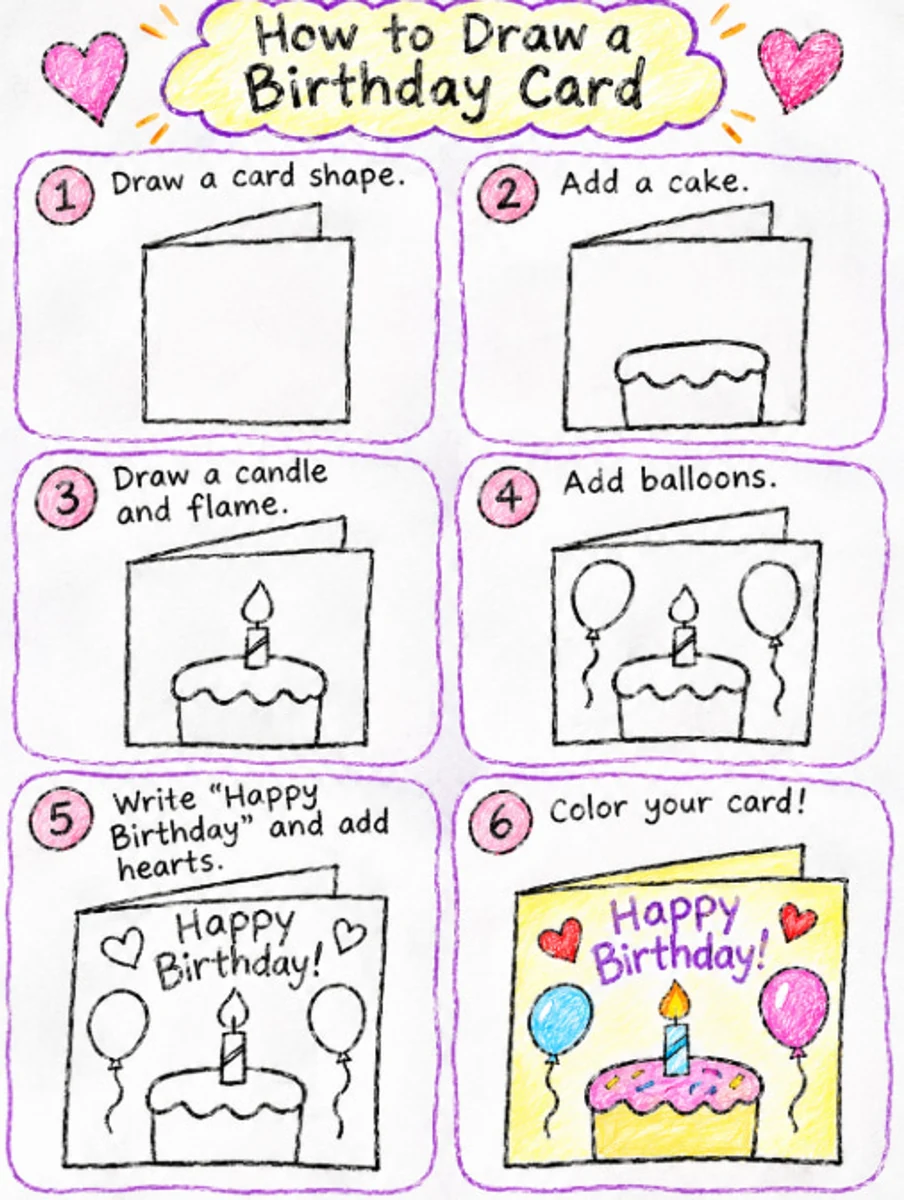
Learning how to draw happy birthday card art is easier one step at a time. This sheet does it in six, from a blank card shape to a finished cake and balloons. Kids can copy each step, or draw their own card on a fresh page.
Here's how all four pages look colored in, so you can borrow the colors. The three covers are exactly the pages you'll print, colored by me. The download is always the black and white page.
This is how to print a birthday card at home and make it your own. A printed cover on folded cardstock looks handmade, because it is. Hand printed birthday cards like this take about twenty minutes:
Want a printable foldable birthday card instead, with the fold line and message lines already drawn? Printable birthday cards to color are laid out that way.
The same steps as the how-to-draw sheet, for drawing on a blank page:
Pick a theme by what they love, then find a card to match:
Every design here comes in four formats, and all four are free. Tap any drawing to open it full size and they are all sitting there together.
A4 PDF 210 x 297 mm
What most of the world prints on. Open it, set the scale to 100%, done.
US Letter PDF 8.5 x 11 in
The same drawing laid out for American paper, so nothing gets cut off at the edges.
Transparent PNG 2000px
No white box behind the artwork. This is the one you want for Canva, a digital planner, or layering the line art over a background.
SVG vector
Opens in Illustrator, Inkscape, Affinity and Cricut Design Space, and stays editable. Resize it as large as you like and the lines stay sharp.
No sign-up for any of them, and nothing is watermarked. What you can and cannot do with the files is on the license page.
Any design above. The card covers download straight away, no email step.
Pick "Actual size" instead of "Fit to page". This one setting fixes almost every "why is it so small" problem.
Otherwise your browser helpfully prints the web address and today's date along the edges.
Cardstock between 65 and 110 lb for the folded card itself, and plain paper for the cover you glue on. Plain paper is fine for the how-to-draw sheet.
Something still off? The full printing guide gets into paper weights, faint prints and why cards fold badly.
Fold a sheet of cardstock in half, top to bottom. Print a cover at 50% scale on plain paper, color it, cut it out and glue it to the front. Write your message inside. It takes about twenty minutes.
Use cardstock between 65 and 110 lb and set the print scale to 100% or Actual size, so nothing gets cut off. For these covers, print at 50% instead, so the cover fits on the front of a folded card.
Yes. These covers glue onto a card you fold yourself. For cards already laid out to fold, with a fold line and message lines, see the printable birthday cards to color.
Printed at 50% scale, a cover comes out about 5 x 3.75 inches on US Letter, or about 12.5 x 9.5 cm on A4. A card folded from the same sheet is 8.5 x 5.5 inches or A5, so the cover fits on the front with a white border all around.
A glue stick. It sticks paper to cardstock without wrinkling it. Liquid school glue soaks in and makes the cover ripple. If that's all you have, use a thin layer and press the card under a heavy book while it dries.
Yes, with the name banner cover. Write the name in the banner in pencil first, then go over it in marker. Add their age in a star or a heart if there's room.
Whatever they love. Balloons and cake suit anyone, flowers suit Mom or Grandma, and animals and dinosaurs suit kids. The covers here have a party theme and a flower theme.
Yes. The how-to-draw sheet breaks a card into six easy steps. Most kids from about age five can follow it, and older kids can use it as a starting point for their own design.
No. The colored samples show how the pages look colored in. The download is always the black and white page, so you can color it yourself.
Yes. Free to download, free to print, and you don't have to hand over an email address to get them. No watermark across the artwork either.
Plain copy paper is fine for crayons and colored pencils. Markers are a different story: they'll bleed straight through it. For those, and for anything you're folding or wearing like a card or a crown, use cardstock. Somewhere around 65 to 110 lb does the job.
Your print dialog is almost certainly set to "Fit to page". Switch it to "Actual size", or set the scale to 100%. While you're in there, turn off headers and footers, otherwise your browser prints the web address across the top of the sheet.
Both. I leave enough margin that neither size chops anything off.
No, sorry. Print as many copies as you want for your own family, party or classroom. But the files can't be sold, re-uploaded somewhere else, or built into a product. I drew them and I'd like to keep it that way.
Four of them. Two PDFs, one sized for A4 and one for US Letter, which is all you need if you're just printing. A transparent PNG for dropping the line art into Canva or a cutting machine, with no white box behind it. And the SVG, which stays editable in Illustrator, Inkscape, Affinity or Cricut Design Space. Tap any design and they're all in the preview.
Yes. Cricut Design Space takes the SVG straight up, and so does Canva. If you're layering the design over a background, grab the transparent PNG instead, because the SVG and the PDFs both carry a white page behind the artwork.